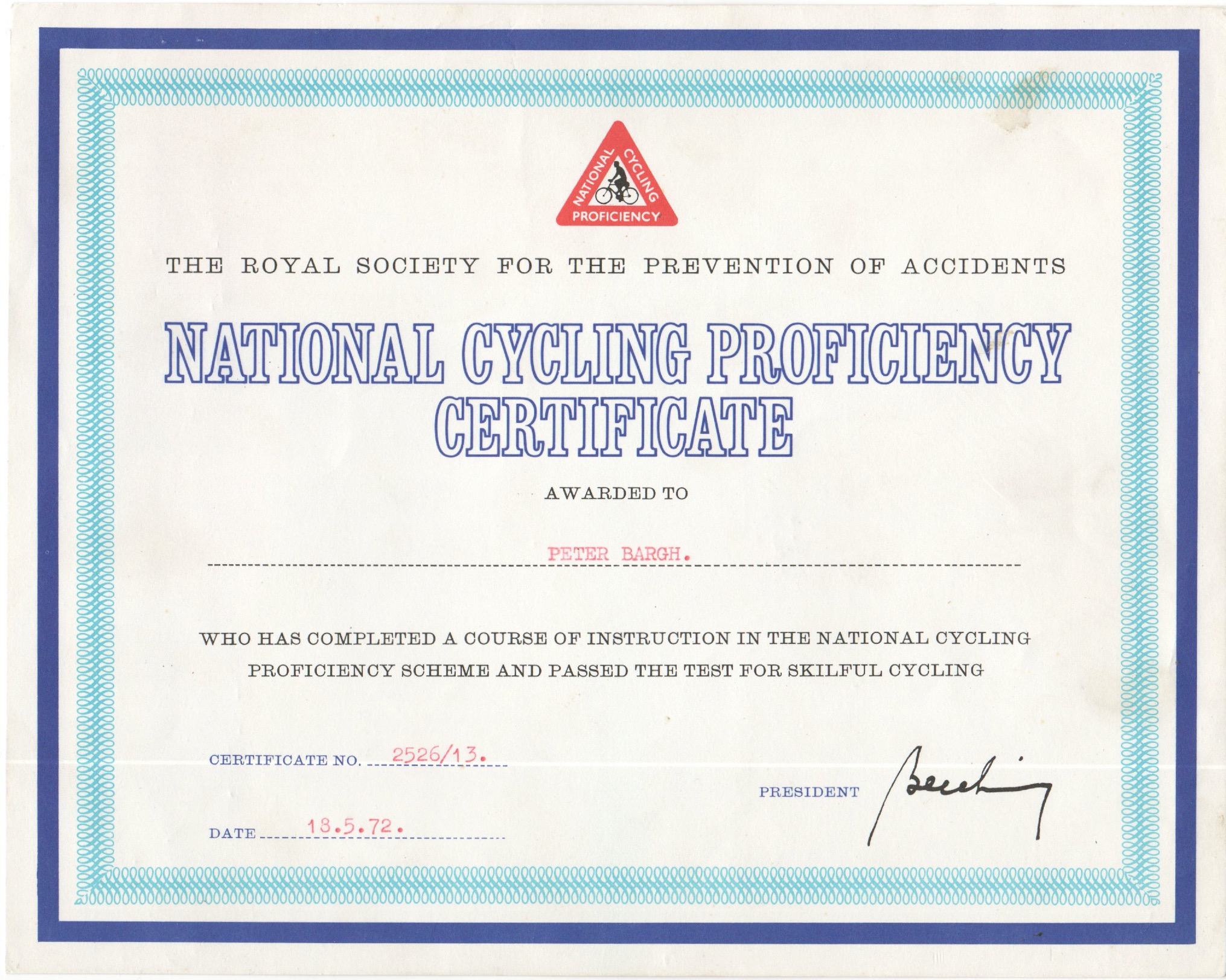
I passed my Cycling Proficiency Test in my last year of primary school. The test was a school-based road safety programme designed to teach us how to ride safely on public roads. It was run organised through local education authorities and the police.
Theory test
Before going onto the road, we were taught:
- The meaning of road signs and signals
- Basic Highway Code rules
- How to signal properly with one hand
- Road positioning (riding away from the kerb, not in the gutter)
- Awareness of cars, buses, and lorries
Bicycle safety check
We had to bring our own bikes. An instructor (in our case PC Lapper) checked
- Working brakes (front and back)
- Bell
- Tyres properly inflated
- Saddle and handlebars secure
- Lights and reflectors (especially important in winter months)
- Helmets were not commonly worn in the 60s so not tested..
Road training
Unlike today’s playground-based training, much of the 1960s test took place on real roads near our school.
We practised:
- Starting and stopping safely
- Looking behind without swerving
- Signalling left and right
- Turning at junctions
- Overtaking parked cars
- Riding single file
- Proper positioning in traffic
Cycling Test
PC Lapper observed us riding a short route. We were assessed on:
- Observation (looking over shoulder)
- Clear hand signals
- Correct road position
- Control and balance
- Obeying road rules
It wasn’t like a modern driving test — it was firm but encouraging. Most of us passed after training.
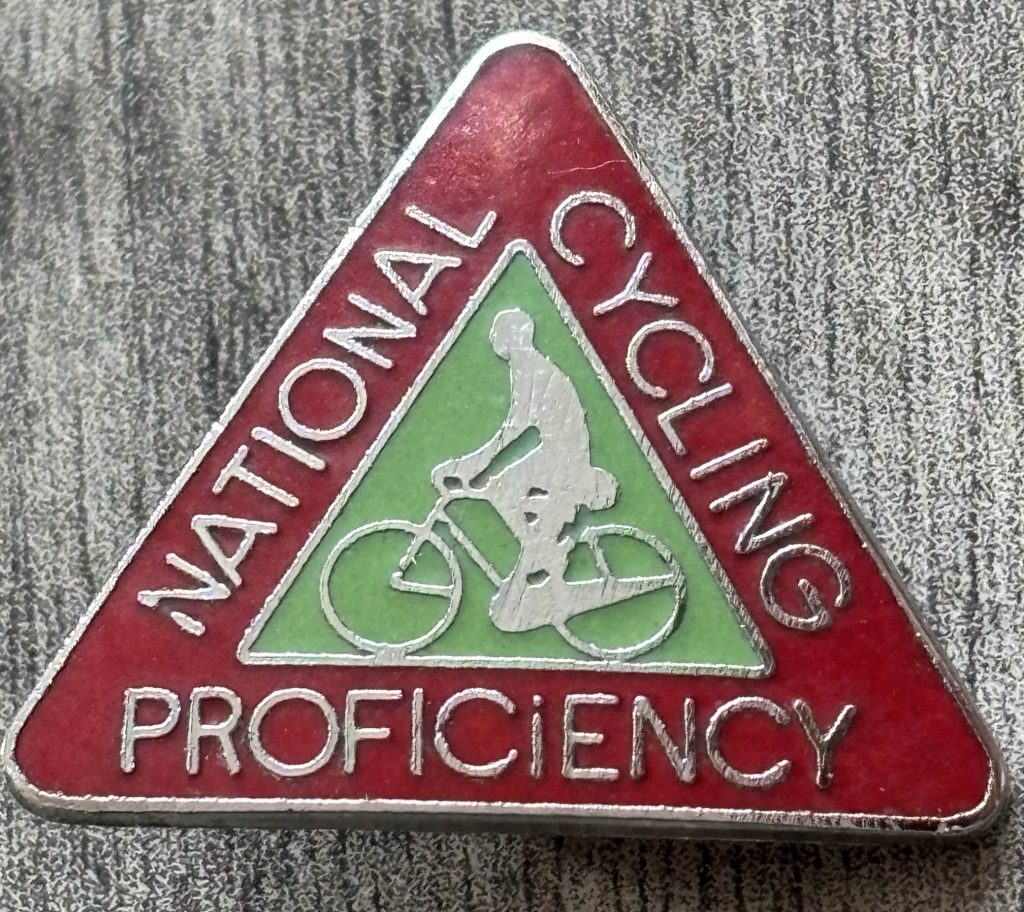
We received a certificate and a badge
Leave a Reply